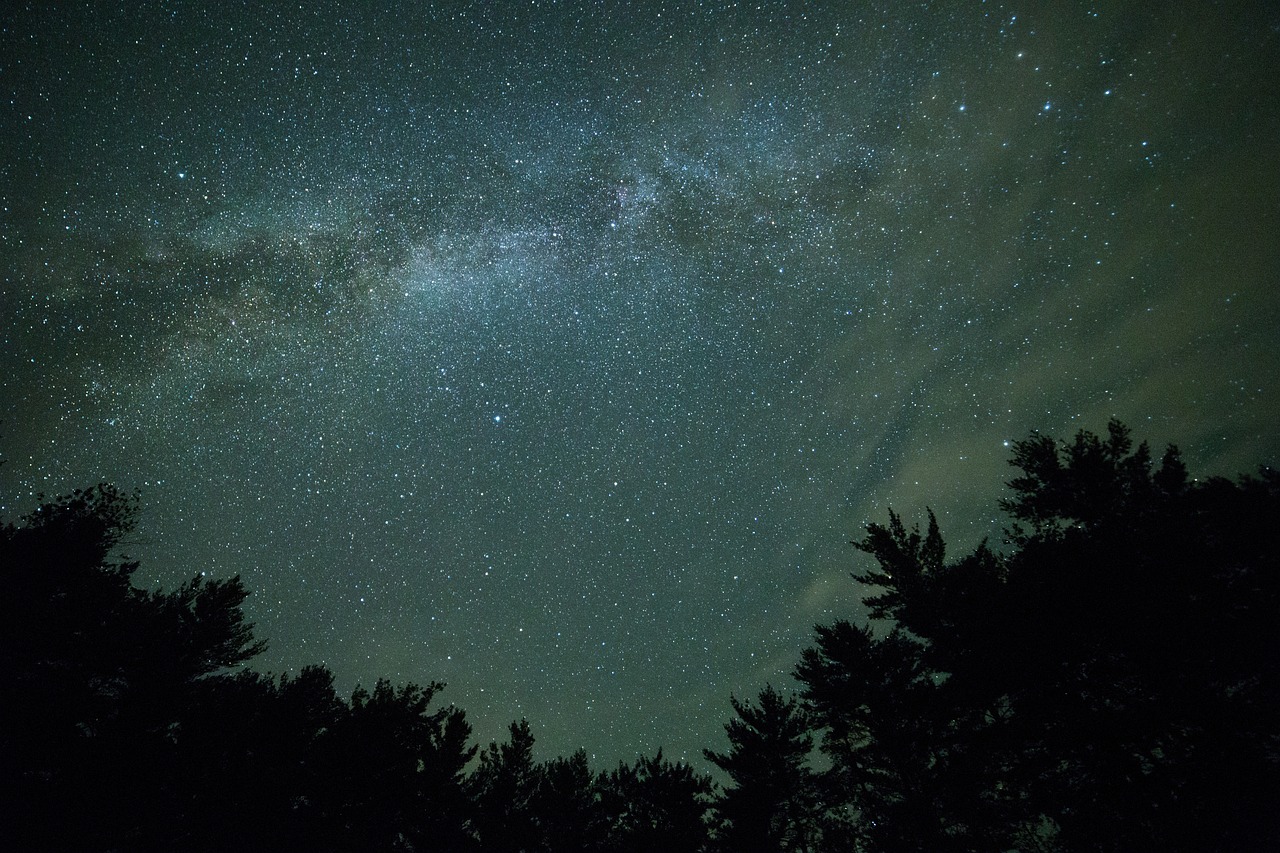
The moment the horizon swallows the sun, the earth throws its dark cloak over the sky, creating a solid black canvas for the stars to shine. In the bushveld, stars shine brighter, and the dark skies seem heavier and more engulfing because of the lack of buildings and the intrusion of city lights. The remote wilderness areas around South Africa are the best places to experience a new type of safari: astrotourism.
Stargazing is a hugely understated and underrated part of the safari experience, often happening around the crackling fire in an iconic open-air boma. But stargazing in South Africa has evolved beyond just a fireside chat vibe. It’s now a significant theme within the safari industry, known as astrotourism, which is gaining popularity in Africa, specifically focusing on stargazing. People are flocking to regions where the primary focus is on stargazing safaris.
What is Astrotourism?
Astrotourism is a niche-tourism type of travel that makes stargazing the epicentre of the holiday experience. These nighttime celestial observations are best experienced in areas with zero interference from light pollution like urban lights, as this creates optimal stargazing conditions. which is why most people head inland into South Africa’s many wilderness spaces. You could opt for a themed holiday accompanied by an astronomy guide, stay at a wilderness lodge offering night sky lectures, or embark on a Kruger safari in the bushveld for prime stargazing opportunities.
In fact, many visitors to South Africa like to combine a traditional safari with a stargazing experience—there’s nothing more thrilling than identifying constellations while listening to the haunting sounds of hyena clans cackling and lions contact calling. Before embarking on your Astrotourism adventure in South Africa, whether you’re venturing into the rugged semi-arid desert of the Karoo, navigating the familiar trails of the Kruger, or ascending to the peaks of the Cederburg mountains, it’s advisable to familiarise yourself with the night sky of the region.
A few starry insights
There’s no point in whipping out the telescopes and booking your spot in the observatory if you don’t at least have the basics. The more you understand, the more you’ll fall in love with the night sky and its myriad of mysteries. Just as human beings do, each star ages and undergoes its own life cycle, with its properties evolving as it ages. It’s apt to consider that we are all stars in our own right! Collections of stars can be grouped into constellations and galaxies, both of which are different entities. With a few starry insights, we’re bound to ignite that inner astronomer.
Galaxies
“A long time ago in a galaxy far, far away”, there lived a collection of stars, dust, gas and dark matter gravitationally bound together, forming a galaxy. Galaxies typically comprise anything from a few billion to trillions of stars. Galaxies with billions of stars are called dwarf galaxies, while gigantic galaxies have stars numbering in their trillions. Galaxies can be classified into three types: Spiral, Elliptical, and Irregular. The Milky Way is a Spiral Galaxy, defined by beautifully patterned multi-arm spirals of stars. Elliptical Galaxies, like the Cygnus A, are round or oval. Cygnus A happens to be the most powerful cosmic source of radio waves known to man. An Irregular Galaxy is (as its name suggests), completely irregular with no definite shape—they’re also the smallest galaxies.
Constellations
Constellations are best described as a community of stars forming a recognisable pattern, viewable by the naked eye from the earth during certain times of the year. For example, the constellation Scorpius is typically seen April to September in southern Africa; while the Orion is prominent in the Southern Hemisphere’s summer sky, typically from around October to March. Of course, there’s also the famous Southern Cross Crux that most are familiar with.
There are 88 named constellations in modern astronomy, each shrouded in unique myths and legends best discussed around a campfire.
We’ll share one such myth (pretend you’re sitting around a crackling fire in the bushveld) with you. In Greek mythology, Centaurus represents Chiron, the wise and noble centaur. Unlike other centaurs known for their wild and unruly behavior, Chiron was skilled in medicine, hunting, music, and prophecy. Chiron was accidentally wounded by a poisoned arrow from Hercules during a battle with other centaurs, and couldn’t heal himself from the poison. To relieve his suffering, Zeus placed Chiron among the stars as the constellation Centaurus, immortalizing his legacy as a teacher and healer in the heavens.
Constellations aren’t just magical groups of stars with stories. For centuries, stars have been used by humans and animals as markers for navigating. Dung beetles use the Southern Cross for orientation; and penguins use it to navigate between breeding and feeding grounds. Humans use it to find south by drawing a straight line through the two stars forming the longer axis of the cross and extending it four times the distance between these two stars. This point marks the direction towards the South Celestial Pole.
Stargazing in South Africa
Now that you’re armed with an arsenal of night sky knowledge, it’s time to start exploring South Africa’s night sky and what to look out for (we’ve briefly touched on this):
The Big 5 of stargazing
In South Africa, the “Big 5” of stargazing typically refers to the five brightest and most prominent celestial objects or groups visible in the night sky. They are:
- The Southern Cross (Crux): A distinctive cross-shaped constellation used for navigation in the southern hemisphere.
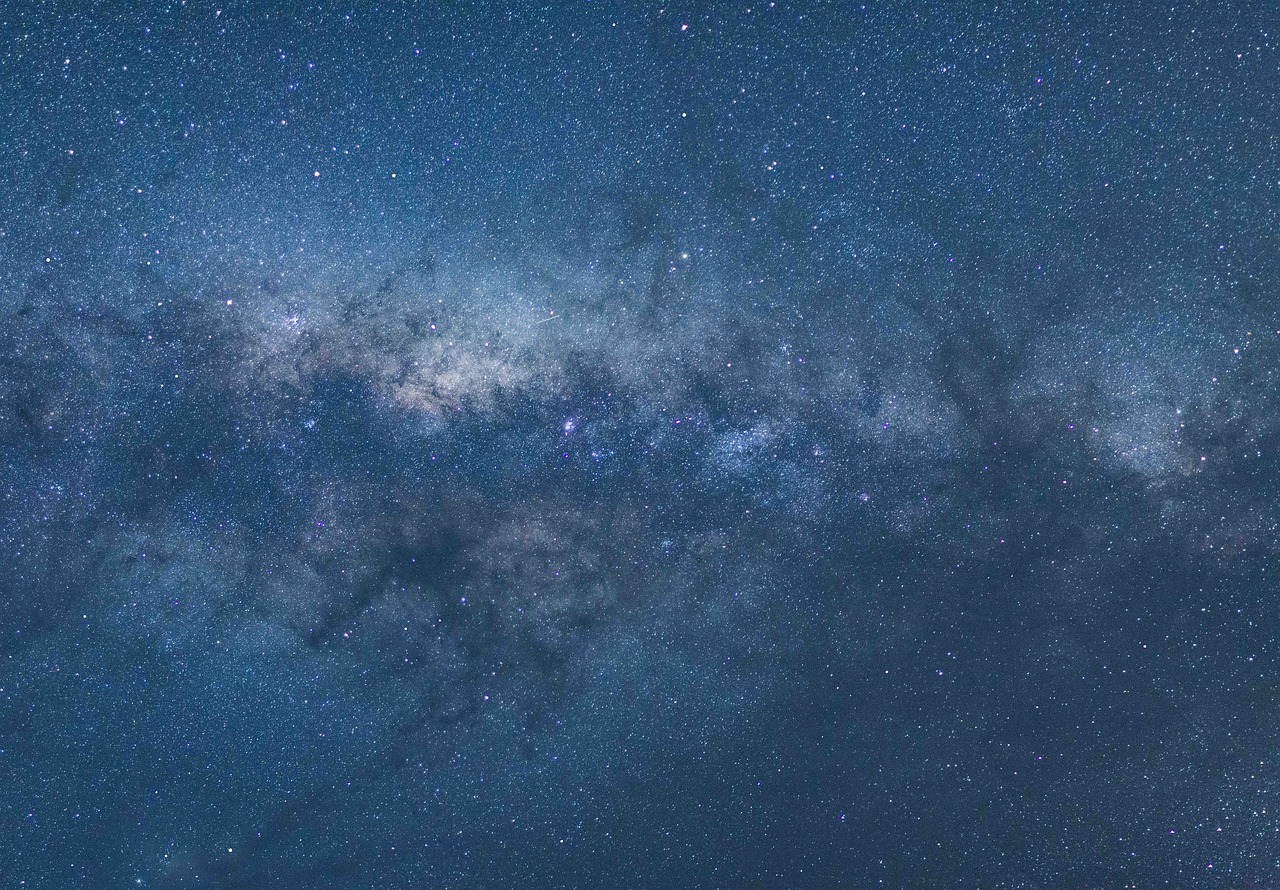
- The Milky Way: A milky hazy band of light stretching across the sky, composed of millions of stars, visible due to its lack of light pollution in many parts of South Africa.
- Jupiter: One of the brightest planets visible to the naked eye, known for its distinctively bright appearance.
- Saturn: Another bright planet with its rings visible through telescopes, offering a unique sight in the night sky.
- Alpha Centauri: The closest star system to Earth, consisting of three stars including Proxima Centauri, which is the closest known star to the Sun.
Besides the Crux and Alpha Centauri, another cool constellation is Orion’s Belt, visible from both the northern and southern hemispheres. Characterised by three bright supergiant stars located in a line (they’re actually light years away from one another), the belt forms part of the larger Orion constellation. If you’ve always wanted to see this shimmery constellation, you’ll need to look upwards anytime from November to March.
Top places for stargazing safaris in South Africa
Now that you’re feeling inspired—and knowledgeable—it’s time to plan your celestial adventure. Choose from guided stargazing tours with observatories and telescopes, or seek out wide open spaces for a more flexible experience. We might be a little bit biast, but our favourite style of astrotourism is the safari. How did we choose these spots? It wasn’t just random. Did you know that there us such a thing as the Sky Quality Meter (SQM) scale of darkness? It’s a device used to measure the brightness of the night sky, with a range of 16 to 22. The brightest is 16, which means there’s more light pollution than the darkest sky that ranks at 22.
Kgalagadi Transfrontier Park
Home to a wealth of wildlife, this exceptionally wild area straddling the borders of South Africa and Botswana, boasts one of the most least polluted skies in southern Africa. It measures an epic 21.9 on the scale of darkness, making it the perfect destination for Terracotta dunes flow effortlessly into arid scrubveld, providing a sanctuary for local specials like gemsbok and springbok. Comprising predominantly Kalahari desert, the Kgalagadi Transfrontier Park truly embodies the meaning of remote. Your Kgalagadi Transfrontier Park safari accommodation ranges from the affordable traditional rest camps to mid-range self-catering wilderness camps, one lodge, and fenced off campsites.
Here are our top places to stay in the Kgalagadi Transfrontier Park:
- !Xaus Lodge: Perched upon a dune, this place is perfect for travellers seeking a comfortable game lodge
- Built on a dry riverbed, the Nossab Rest Camp is renown for its predator sightings and is ideal for an activity based holiday
- The multi-tented Kalahari Tented Camp is ideally located on top of a red sand dune overlooking a waterhole
The Cederberg
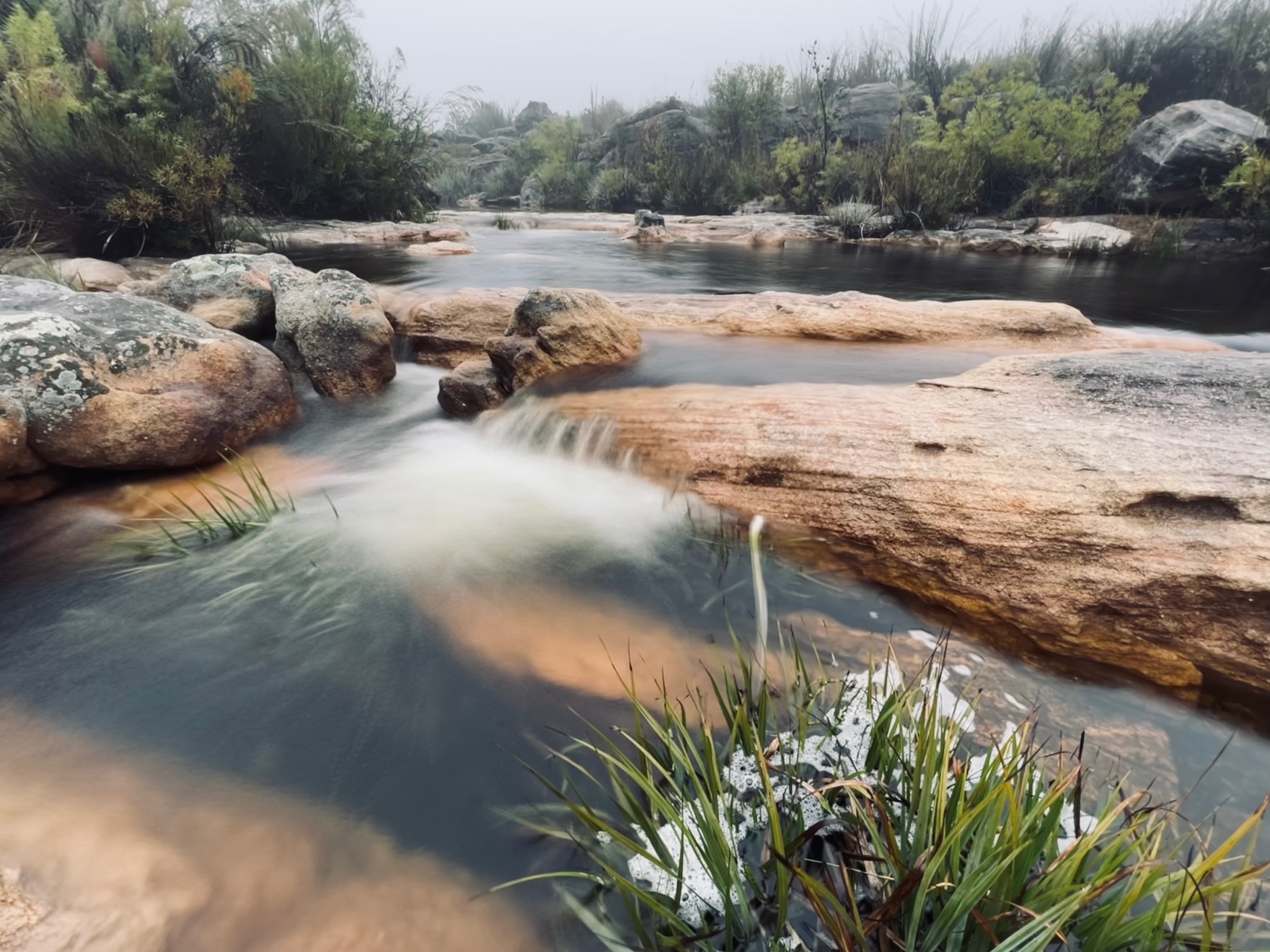
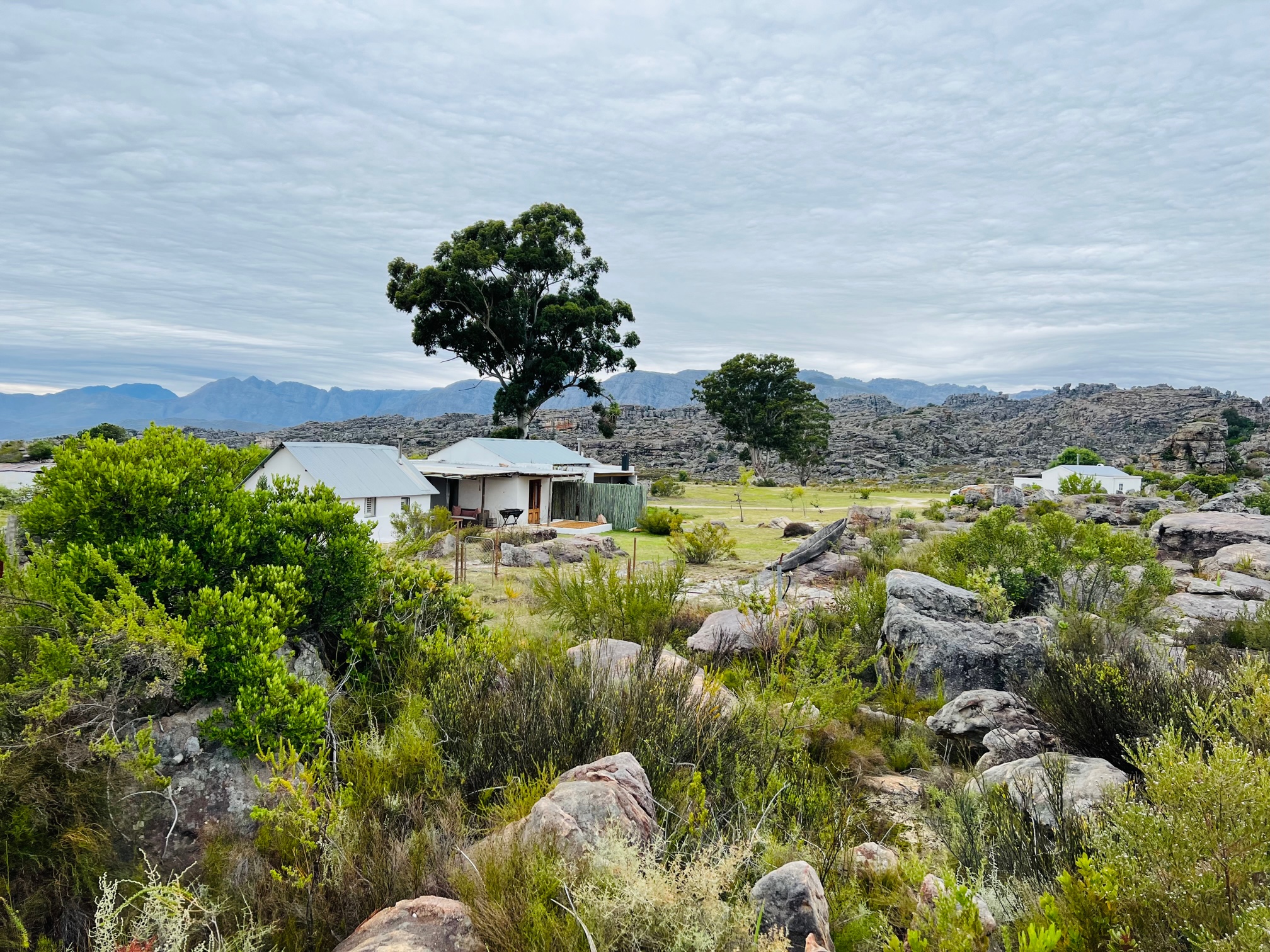
Famed for its band of mountains, lunar landscapes and dramatic craggy rock faces; the Cederberg is every hiker’s dream destination. although not considered a top safari destination, it holds its own in terms of birding, geology and flora. For stargazing, it offers an unparalleled night sky experience for budding astronomers, measuring an impressive 21.5 on the SQM scale! For the more adventurous soul, we’d recommend getting a permit to go wild camping above the Wolfberg Cracks and arch.
If alfresco camping isn’t your jam, opt for a more relaxing lodge stay, mountain cabin or family campsite. You’ll be pleased to know that there’s also the Cederberg Astronomical Observatory that hosts public observing evenings, where the secrets of the night sky are unveiled. From hiking to spotting black eagles and exploring this outstanding area of biodioversity, the Cederberg really is the Western Cape’s major wilderness drawcard.
Here are some of our top places to stay in the Cederberg Wilderness area:
- Simbavati Cederberg Ridge: for luxury seekers and those who are familiar with the Simbavati safari brand
- Cederberg Wilderness Algeria: Offers simple accommodation, ideal for families
- Bliss and Stars for a complete bespoke and boutique experience, with a focus on retreats
- Cedarpeak cottages self-catering accommodation is ideal for groups looking for a remote mountain escape
- The iconic Sandrif Holiday Resort for mid-range wilderness cabin escape in the heart of the Cederberg area
The Greater Kruger
With a Sky Quality Meter (SQM) of 20.5 – 21.5, the Greater Kruger is yet another fine stargazing destination in South Africa. We love the Kruger for stargazing because you can double-up with a safari. Imagine identifying stars while sitting around a campfire in the boma, listening to howling hyenas and contact-calling lions. Whether it’s a safari in a private reserve or a more budget-conscious self-drive safari in Kruger National Park, you can’t go wrong with South Africa’s premier safari destination.
Because the Kruger is so expansive, it’s hard to define its entire ecosystem in a short paragraph…But we’ll certainly try. Coomprised of the state owned Kruger National Park that’s bordered by a patchwork of private Kruger reserve, the vegetation here is a mix of mopani in the north, thornveld, savannah grassland, mixed woodland and riverine forests. Of course, this makes an exceptionally biodiverse area
There is a network of rivers running through the Greater Kruger, as well as small hamlets and towns serving as the gateway to the reserve and parks. From white rhino to dwarf mongoose, the Big 5, African wild dogs and over 500 species of bird; the Kruger has certainly cemented itself as the premier safari destination in South Africa. Now imagine all of that, coupled with stargazing
Here are some of our top places for stargazing in Kruger:
- Nthakeni Bush and River Camp in the Limpopo’s far north-east in the Mukato Game Reserve
- Berg-en-Dal Rest Camp inside the Kruger National Park
- The ultra-luxurious Singita Lebombo Villa, recently voted no. 15 in The World’s 50 Best Hotels of 2023
- nThambo Tree Camp in the Klaserie Private Nature Reserve
- Pafuri River Camp in northern Kruger National Park, straddling the borders of Zimbabwe and Mozambique
Karoo National Park
If you’re thinking of combining a coastal sojourn to the Mother City with a wilderness break, consider the Karoo National Park. It’s an easy self-drive from Cape Town and offers exceptional conditions for stargazing due to its remote location and minimal light pollution. An exact SQM reading for this area isn’t always possible, but average readings from the region are 21.5—prime conditions for astronomical observations!
The Karoo National Park is a vast and harsh semi-desert region characterised by a mosaic of fossil-filled mountains, escarpments, deep valleys and hazy open plains dotted with dwarf shrubs. It’s a place where only the strong survive – wildlife here is tough and has adapted to this unforgiving environment. Starting roughly around Beaufort West, the 90 000 hectare reserve is home to over 200 species of bird and plentiful mammals (springbok, gemsbok, wildebeest, zebra, bat-eared foxes, and aardvark). Look out for the rare riverine rabbit in this region.
There are three main places for stargazing in the Karoo National Park:
- There’s the main rest camp in the national park, complete with 19 Cape Dutch style units
- For more the budget-friendly, there are 24 caravan and camping sites
- An old Shepherds hut that sleeps two people (Afsaal Cottage)
- The two-bedroomed Ebezwini Cottage is can be configured to sleep seven people
Drakensberg
If it’s drama you’re seeking, head to the lesser-explored Drakensberg region in KwaZulu-Natal. Known for its looming mountains lording over the one of South Africa’s most biodiverse landscapes, this remote region is ideal for wilderness escapes and multi-day hikes. Stretching over 1,000 kilometres, this majestic mountain range is home to towering peaks, deep valleys, and lush, rolling hills. It’s here that you’ll discover a patchwork of ancient rock art sites, crystal-clear streams, and rare wildlife. The Drakensberg is South Africa’s longest and highest mountain range, making the perfect destination for astrotourism. In many parts of the Drakensberg, particularly in the more isolated areas, the night skies are very dark, offering excellent conditions for observing stars. The SQM readings occur within the range of 21 to 22.
These are our top Drakensberg accommodation options for stargazing:
- Antbear Eco Lodge: The lodge has a a dedicated stargazing hammock on-site as well as cave accommodation with private viewing decks
- Cathedral Peak Hotel: offers thrilling stargazing tours, among many other activities
When you learn more about astrotourism and the stargazing in South Africa, you’ll soon find that a star is born.