It’s not unusual for first-time safari-goers to hyperfocus on spotting the apex predators of the bushveld, along with the giant herbivores and birds of prey. And let’s face it, if you’ve never been to South Africa on a proper safari, it’s only natural. While seeing these iconic animals in the wild is a magnificent experience, there’s a host of often-overlooked safari species that deserve your attention too.
The wild is a balanced ecosystem, where every species plays a vital role — and sometimes, it’s the smaller or less glamorous creatures of the veld that have the most fascinating stories to tell. So, while you’re out there encouraging your guide to “put foot” and Ferrari-safari their way through the bush to catch up with that leopard sighting radioed in from a nearby vehicle, don’t forget to appreciate the many other incredible animals around you.
Not sure where to start? Here’s our list of six overlooked animals to spot on safari in South Africa.
Animals to Spot on Safari in South Africa
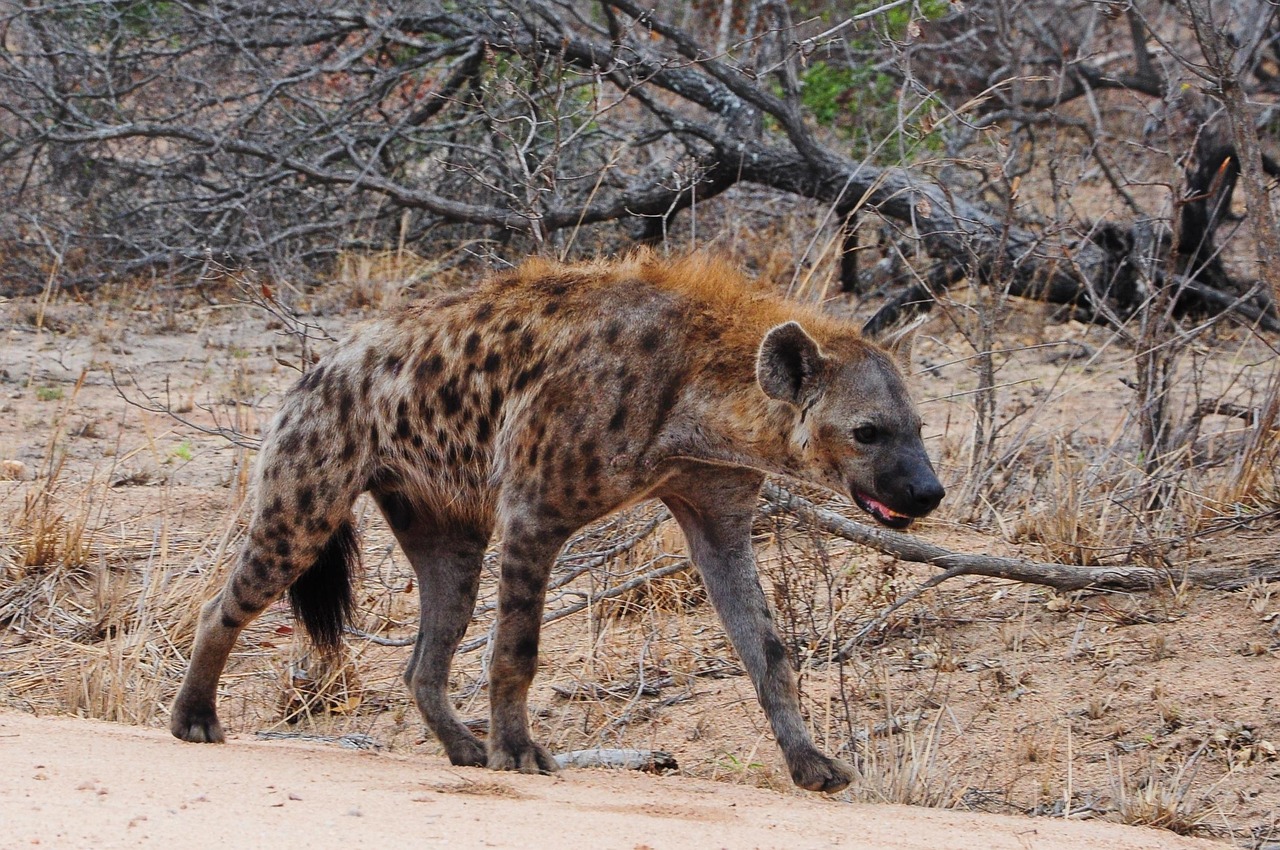
The Haughty Hyena
How often do you look at a hyena scurrying past your safari vehicle and think “oh, it’s just a hyena”?
These odd-looking creatures are among the most successful hunters and scavengers in the bushveld. Alongside vultures, they form part of the wild’s clean-up crew, removing debris from carcasses and devouring rotting meat left behind by other predators. But don’t mistake them for mere scavengers — hyenas are formidable hunters too. Their takedowns are impressive, relying on strategic teamwork to isolate and exhaust a weaker member of the herd. They’re persistent and possess the endurance of an Olympic athlete.
When not hunting, hyenas boldly linger on the fringes of a big cat’s kill, often darting in to steal prey and summoning reinforcements with their distinctive vocalisations.
So, let’s chat about those vocalisations. A hyena’s calls range from eerie whoops and low grunts to its infamous “laugh” — a high-pitched cackle that signals stress, excitement, or submission within the clan. In total, hyenas use an estimated ten distinct vocalisations, each suited to different situations like coordinating hunts, asserting dominance, or calling for backup. It’s a surprisingly sophisticated system of communication for such a misunderstood predator.
Capturing prey, communicating, cleaning up, and collaborating are all hallmarks of hyena behaviour — but there’s even more depth to this sentient species. Hyenas live in a strict matriarchal society, with a dominant alpha female leading the clan. Female spotted hyenas are larger, more aggressive, and outrank all males — even the lowest-ranking females.
Clans can include up to 80 individuals, and social rank is inherited: daughters typically assume a position just below their mothers. Males, meanwhile, must leave their birth clan upon reaching maturity and join a new one, where they begin at the bottom of the social ladder. Access to food, mating rights, and status is governed by cooperation, body language, scent-marking, and vocal cues.
Who needs a lion sighting when hyenas are scurrying about?
The Comical Secretary Bird
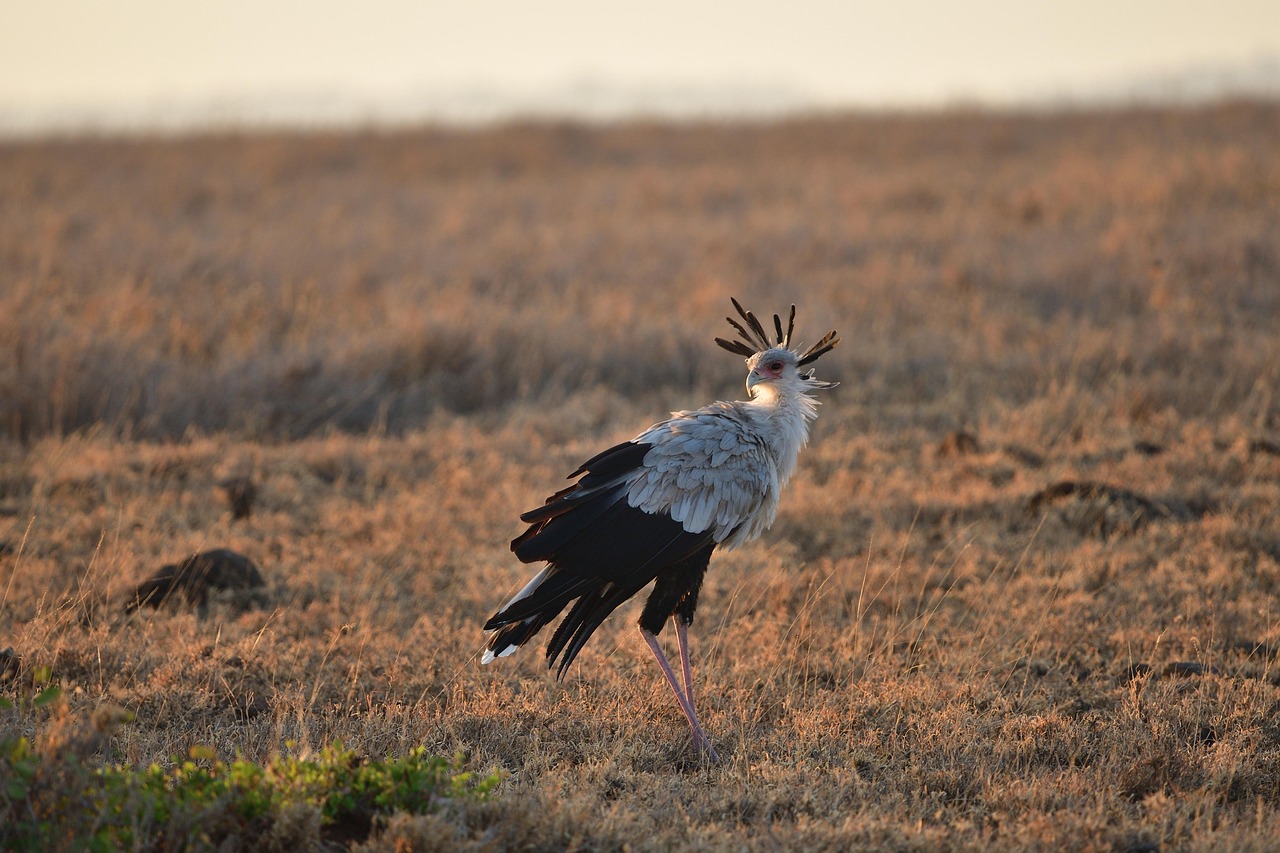
A bird that walks more than it flies and stamps snakes to death? Iconic, bizarre, and undeniably entertaining.
Let’s start at the beginning. Where did the secretary bird get its name? There are a few different theories, but the one we like the most is the Dutch Settlers version where they claim that the birds resemble 19th Century Lawyers’ Secretaries. Interestingly enough, its scientific name means “archer of snakes” because they love hunting snakes.
This bird of prey is primarily terrestrial and is related vultures, harriers and hawks – which you can tell from its intimidating size and impressive 1.3 m tall scaly legs which act as a natural armour against snake bites.
Secretary birds are like stilt-walking assassins — elegant, odd-looking, half-hawk and half-crane, and utterly ruthless. Their snake-hunting style is unique: they strike with lightning-fast, bone-crushing kicks that can kill venomous snakes in seconds.
Secretary birds are surprisingly social and often work in pairs to defend large territories. They also mate for life and regularly put on elaborate mating and courtship displays, comprising of an elegant dance, pendulum flights, head bobs and wing displays.
As both predator and protector, the secretary bird plays a crucial role in keeping snake populations in check. They’ve even been seen taking on cobras and puff adders with chilling precision.
More than just entertainment value, the secretary bird is a must-spot while on safari!
The Die-Hard Dung Beetle
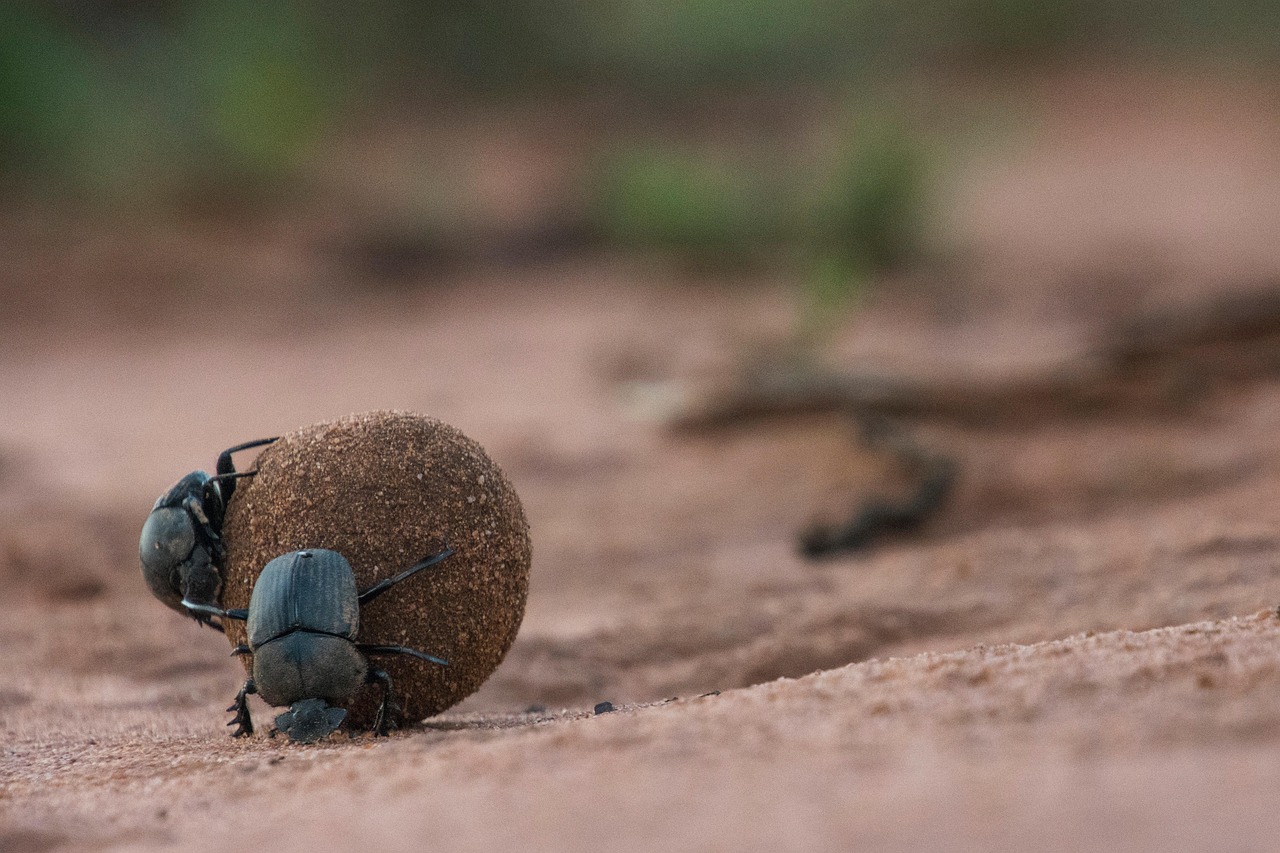
Rolling poo with purpose, dung beetles are mini eco-warriors helping keep the bush clean and fertilised.
You can easily recognise a dung beetle because it’s, well, often surrounded by dung. These hardworking insects are known as “coprophagous,” meaning they feed on the excrement of other animals. They favour herbivore dung, as it often contains partially undigested grasses—an ideal food source. These bulbous beetles are nature’s sanitation team—cleaning up waste and recycling nutrients back into the soil. By breaking down dung, they help control parasites and flies while naturally fertilising the bush.
Dung beetles spend much of their time rolling dung into balls, which the female uses as a site to lay her eggs. Once the larvae hatch, they have a ready supply of nourishment within the dung ball.
To transport their dung ball back to their nesting site, the beetles must navigate in a specific direction. One beetle typically climbs on top of the ball to steer, often appearing confused or disoriented. In reality, it is orienting itself. Fascinatingly, recent research has revealed that a particular species of African dung beetle uses the stars to navigate its way home.
Feeling lost in the bushveld? You can head towards the closest dung beetle for answers.
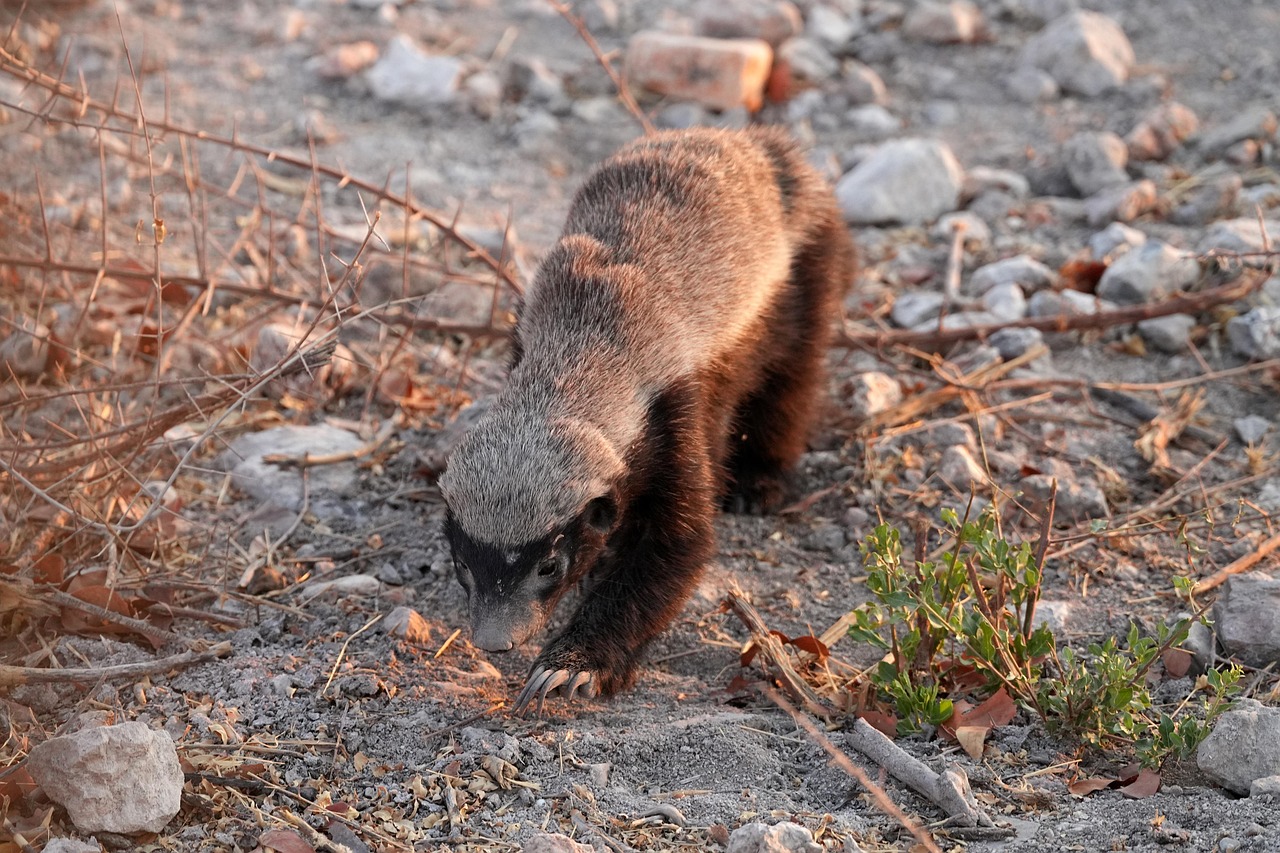
The Relentless Honey Badger
The honey badger swaggers with fearless confidence, casually striding through lion territory and even sleeping off cobra venom like it’s no big deal.
The honey badger’s reputation is well earned—this tough little predator has been known to raid beehives, dig into burrows, and take on animals twice its size with zero hesitation. Its loose, thick skin makes it hard to pin down in a fight, allowing it to twist and bite even when caught.
Armed with sharp claws, powerful jaws, and a remarkable resistance to venom, the honey badger doesn’t just survive the African bush—it dominates it with sheer attitude. Whether it’s stealing food from a leopard or shrugging off a swarm of angry bees, the honey badger lives by one rule: don’t mess with me.
Honey badgers are omnivores with a varied diet that includes rodents, reptiles, birds, insects, and—true to their name—honey and bee larvae. They have incredibly strong forelimbs for digging and can tunnel into hard ground in minutes. Their skin is about 6 millimetres thick, allowing them to withstand bites from snakes, bees, and even small predators. They’ve been recorded surviving cobra bites thanks to a partial immunity to venom, and are known for their intelligence—some have even been seen using tools or escaping enclosures in surprisingly clever ways.
You won’t need to search too hard to see a honey badger – they usually saunter through camp so you’ll get a few close-up sightings.
The Deathly Black Mamba
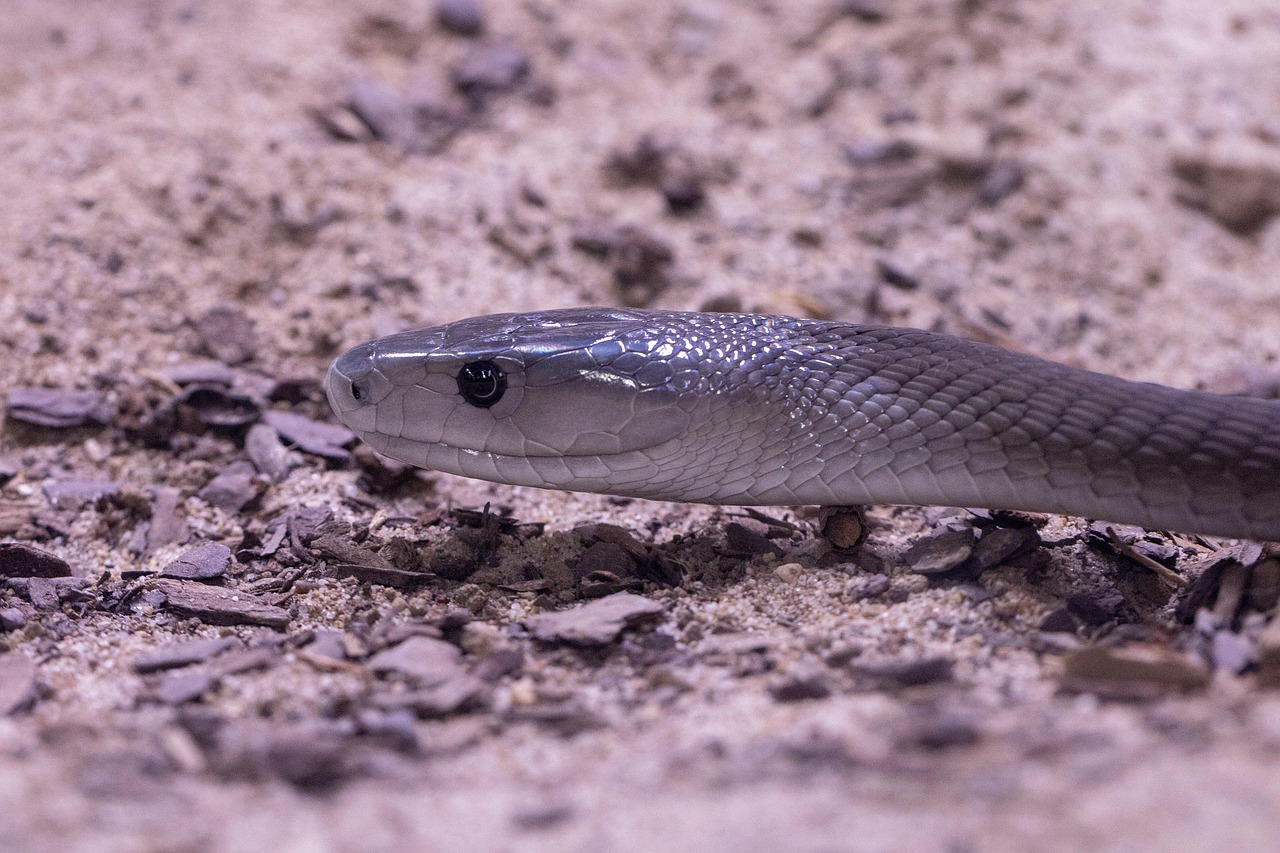
Fast, fierce, and famously feared, the black mamba is like the sports car of the snake world — lightning-quick, and best admired from a safe distance.
Fast, highly alert, and famously feared, the black mamba is one of Africa’s most formidable snakes and best respected from a distance.
Despite the name, it isn’t black. The nickname comes from the jet-black interior of its mouth, flashed as a warning when threatened. Black mambas are not naturally aggressive and will usually flee if given the chance, but when cornered they are fast, defensive, and highly dangerous. They also tend to seek revenge when angered.
They are Africa’s longest venomous snake, capable of reaching over four metres, and their neurotoxic venom can be fatal without treatment. Intelligent and aware, black mambas often raise part of their body to scan their surroundings — a posture that adds to their fearsome reputation.
Thankfully, sightings are rare. When encountered, they usually vanish as quickly as they appear – consider yourself both lucky and unlucky to see one.
The Serial Killer Spider Hunting Wasp
Armed with paralysing venom and a bad attitude, the spider-hunting wasp is a stealthy assassin.
Small, glossy, and disturbingly efficient, the spider-hunting wasp is one of the bushveld’s most ruthless predators.
Often seen on walking safaris, this striking wasp hunts large spiders, including baboon spiders. It paralyses its prey with a precise sting, drags it into a burrow, lays an egg on it, and seals the entrance. The larva then feeds on the spider — alive but immobilised.
Despite its intimidating lifestyle, the wasp is not aggressive towards humans and will only sting if provoked. Painful? Yes. Deadly? No.
Proof that in the bush, some of the most chilling hunters come in very small packages.

In conclusion, when on safari, don’t skip over the smaller wildlife – they have a fascinating story to tell! Next time you’re out on game drive, consider these safari animals to spot in South Africa.